You are not a mage. You were one, for a few hours.
Nobody opened it: it was already there, and somebody found it. Through that crack ordinary people are summoned for a few hours, and with that the thing that admitted no fight can be fought.
The inevitable stopped being inevitable. Barely, and not for good.
Five elements. The fifth is not a place to begin: it is where the other four converge. Each element has exactly one contrary — fire and water, air and earth — and three kin. Spirit opposes nothing, which is why it joins. Writing the contrary over an open spell does not mix it: it puts it out.
One stroke, in public
You do not work magic in front of people: you give reality an ordinary excuse. A civil activation is one symbol, one stroke, no display. The same elements that break things will move people without touching them.
FireA smell of burning. A panel throwing sparks.
WaterA leak where nothing should be dripping.
AirA gust. A door slammed. Paper going everywhere.
EarthA short tremor. A pane of glass buzzing.
SpiritThe urge to leave, with no reason you could name.
The world is written
What you call physics is a grammar: rules that say which sentences can exist. A stone falls because that sentence can be said. A mage asks the world for no favours; they write in it, and a sentence badly written does not happen. What a mage holds true is what their world becomes. That is why everyone wants to convince you.
The veil
Ordinary people see it. What they cannot do is say it: their brain will not let them. They are witnesses and they are mute, which is why someone lets you pass in the street and can never say why. A high-level mage can force the veil, and is then read as a madman or an agitator.
Spells are written
There is no list to choose from. A spell is a sentence in four parts: what it is made of, whether it kindles or quiets, whom it lands on and what it changes. A stroke is a syllable; three make an ordinary word. Nine symbols older than the alphabet still count whole, and the first dream is taught in them. There is no sound over there: people speak with their hands. But there is a beat, and what is written on time is heard more.
Who speaks to you
They will speak to you while you sleep. The entities that speak in the dream are not allies by virtue of speaking: some of them are the enemy, and a taken dream teaches something false. Nobody will tell you which is which. You judge that.
How a mission ends
In a person. A human ridden by something that does not fit inside a human head; a human who took power by dark arts and understands half of what they let out; or one of the voices from the dream, in the flesh.
Five ways to read it
Nobody reads the whole grammar. Whoever walks all of it wakes to five readings: the Writers read what each word is made of, the Glitchers its sign, the Observers whom it lands on, the Resonants what it changes, the Akashics everything already written. None competes with the others. Each sees a part, and each has something it cannot see.
Factions
Five ways of reading the breach. Each faction reads one part of a spell and rewards one way of drawing it.
Akashics
All that was is still written.
They read the Akashic record, the memory of the multiverse. They look for the truth in what has already happened.
Glitchers
Reality has errors. We see them.
They perceive the faults in the code of the universe and learn to pass through them.
Writers
The world is a text. We hold the pen.
They believe reality is written, and that a true stroke can rewrite it.
Resonants
Everything vibrates. We keep the beat.
They cast in time with the music; when stroke and rhythm meet, reality answers.
Observers
Looking is also acting.
They see without intervening, knowing that observing changes what is observed. They keep what others dare not look at.
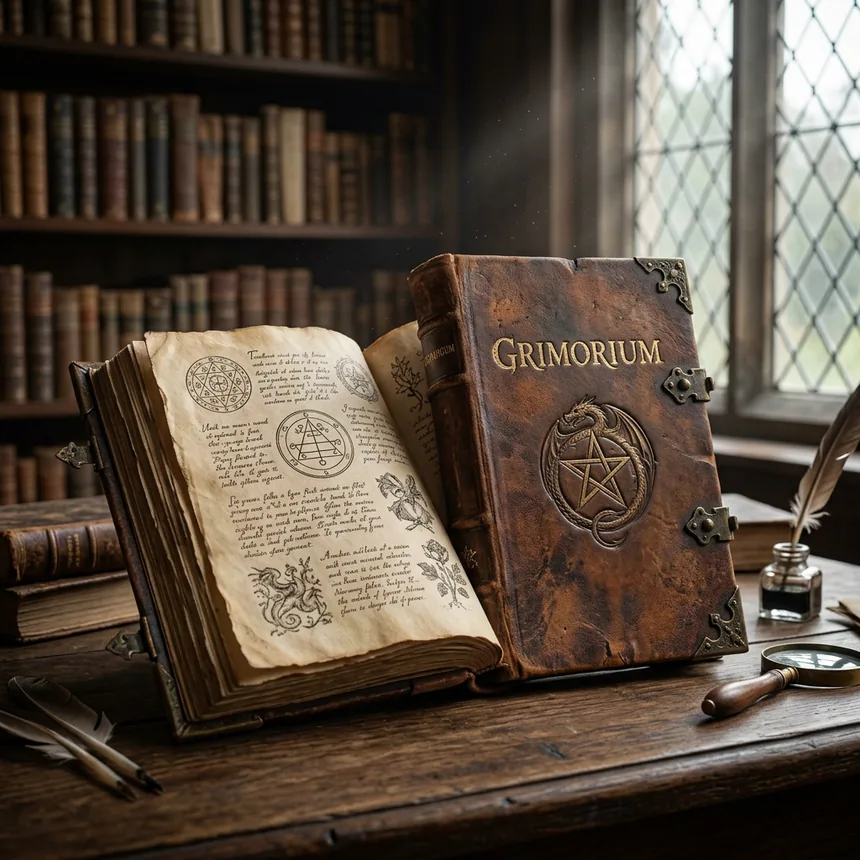
Do not get summoned without a grimoire.
The grimoire is physical memory: it keeps what your waking mind had nowhere to put. One is opened here in your name.